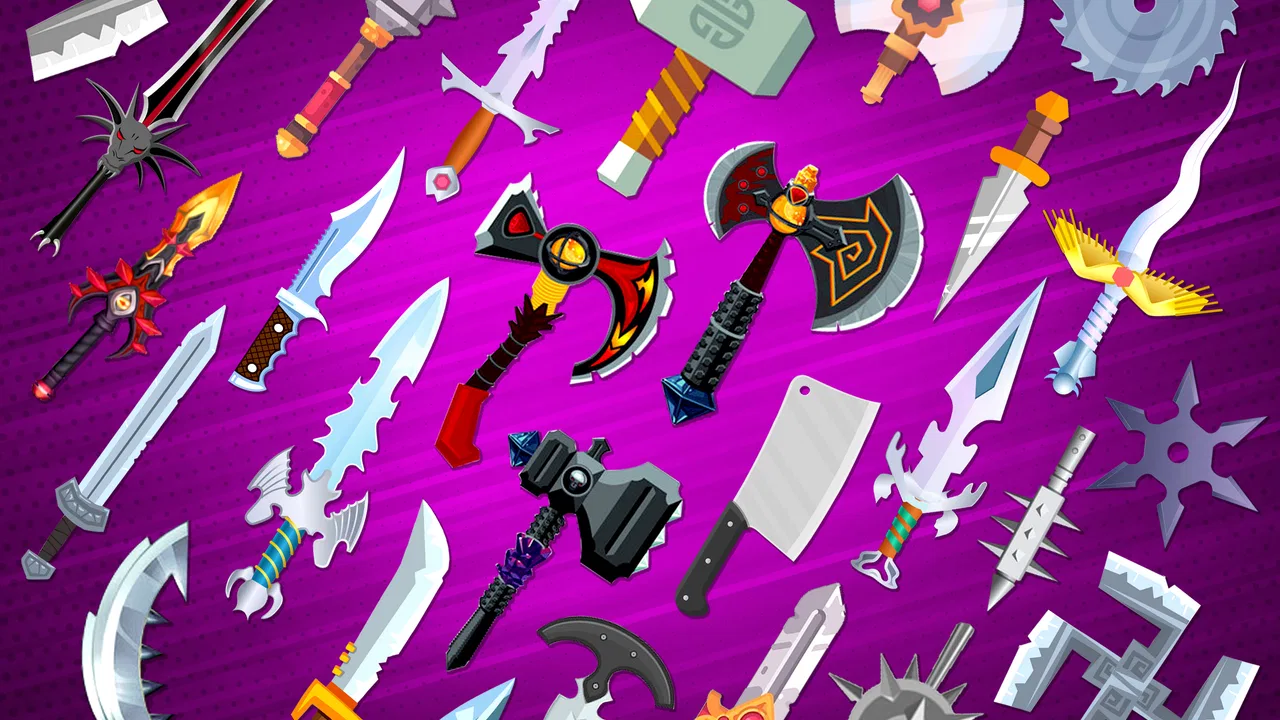
Stick Hero Stickman Smasher
- 3.5
- Rating
- 10.00M
- Installs
- Free
- Price
 Analysis by App-foxy
I picked up Stick Hero Stickman Smasher expecting a quick stick-figure distraction, and that is exactly where it works best. It is a free strategy game from GameFlex Studio, built around short bursts of action in which I try to outplay stick opponents rather than settle into a long, complicated campaign. The presentation is simple, the premise is easy to understand, and I can hand the phone to someone else without needing a long explanation first.
That simplicity also explains both its appeal and its limits. This is not the kind of strategy game I would choose when I want a deep economy, a large map, or a carefully planned multiplayer session. I see it more as a compact game for waiting rooms, short breaks, or a shared device passed around the house. The store presents it as a stick warrior game, but my experience is that its real strength is the immediate decision-making: watch the situation, react quickly, and learn from a failed attempt.
How it works when a phone is shared at home
A realistic use case is a family tablet or a phone that several people use casually. One person can play for a few minutes, put the device down, and let someone else try without turning the whole evening into a formal gaming session. That makes it more approachable than many strategy titles that require a personal account, a long tutorial, or a saved world that only one player understands.
You May Also Like

 Blood Strike: 2.5 Anniversary
Blood Strike’s Loadouts Turn Every Drop Into a Tactical Gamble
A close look at Blood Strike’s custom loadouts: how fast access to signature weapons reshapes its battle royale rhythm, rewards preparation, and narrows the gap between fights.

 Pandora - Music & Podcasts
Pandora’s Music Is Easy to Start, but Harder to Recover
Pandora’s strength is its low-effort path from a seed to a station. Its weak spot is how much confidence it asks you to place in connection, setup, and quiet recovery.

 8 Ball Pool
 Is Built on Rivalries, Rematches, and Routine
A close look at the rivalries, rematches, shared routines, and unanswered safety questions that turn a quick pool match into a persistent mobile community.

 Samsung Music
’s Quiet Strength Is Playing What You Already Own
Its reach comes less from spectacle than from dependable access to a personal library. That simplicity is both the app’s strongest retention engine and its ceiling.

 AccuWeather: Weather Radar
AccuWeather Review: A Quick, Clear Forecast for Everyday Decisions
For everyday plans, the best forecast is the one you can understand quickly. AccuWeather makes rain timing, radar, and local conditions easy to act on, with a few trade-offs.

 Hill Climb Racing
Why Hill Climb Racing Still Turns Crashes Into One More Run
A tiny car, a bumpy hill and one more upgrade: Hill Climb Racing keeps resurfacing because its simple chaos makes every near-miss feel personal.
More From Our News Desk



I would still treat it as a single-device game rather than a coordinated household activity. There is no reason to assume that progress, settings, or purchases are separated automatically between players, so I would establish a simple rule before handing it over: each person plays from the same device environment, and nobody spends money without asking. That small boundary matters more than it might seem, especially because the game includes optional in-app items priced from ninety-nine cents to $9.99 each.
The free entry point is useful here. Someone can test the game without paying first, while the household can decide later whether any optional purchase is worthwhile. I would not make an in-app purchase just to find out whether the core loop is enjoyable. The first sessions are enough to show whether the quick stick-fighting format suits the player, and that decision should come before spending.
On a shared phone, I also recommend giving each player a clear turn instead of passing the device back and forth after every attempt. The game benefits from concentration, and a short uninterrupted run makes it easier to understand what caused a mistake. A simple rotation works well: one person plays, explains what they were trying to do, then the next person takes over. That turns the game into a light conversation rather than a noisy competition.
For younger players, an adult may want to handle the store account separately from the game itself. The age guidance is Everyone 10+, which places it in a space suitable for many children and families but not necessarily for every child or every household rule. I would look at how the particular player reacts to repeated defeat, fast action, and the temptation to buy extras. The rating is a useful starting point, not a substitute for knowing the person using the device.
Starting without creating confusion
The setup is uncomplicated because the game’s idea is immediately readable. I did not need to study a large rulebook before trying to play. That is a real advantage on a shared device: a new player can understand the basic goal by watching one attempt. If I were introducing it to a child or a relative who does not usually play strategy games, I would demonstrate one round and then let them experiment rather than explaining every possibility in advance.
There is a subtle difference between being easy to start and being easy to master. The first few attempts make the game feel straightforward, but success depends on timing and on recognizing when an aggressive move is actually a bad idea. I found that new players often rush because the stick-figure style looks playful and harmless. The better approach is to pause mentally, read the immediate threat, and choose the response that keeps control instead of simply moving as fast as possible.
That is my first practical tip: use the opening attempts as observation rounds. Do not judge the game only by whether the first try succeeds. Watch how opponents behave, notice which situations repeatedly cause trouble, and treat failure as information. This makes the strategy layer more visible and prevents the game from becoming a string of random taps.
The second useful habit is to avoid coaching too aggressively when someone else is playing. On a shared device, it is tempting for an experienced player to call out every move. That may produce a better result, but it removes the small satisfaction of discovering the pattern personally. I get more value from the game when I offer one suggestion after a failed attempt, such as waiting longer or avoiding a risky approach, then let the player test that idea independently.
Because the current version is 3.3, players should keep the installed copy reasonably current when an update is available through their platform. I would not promise that an update changes the game in any particular way, but staying on the current release is sensible for a title that is actively presented as a modern mobile game. The minimum operating system is Android 7.0, so compatibility is worth checking before trying it on an older Android device.
Where the strategy comes from
Calling this a strategy game does not mean it resembles a traditional board game or a large-scale tactics title. Its strategy is compressed into immediate choices. I am not managing a kingdom or planning a campaign several hours ahead. I am deciding how to respond to a threat, when to take a chance, and how to improve after a failed attempt.
That compact design makes it a good fit for players who like the feeling of strategy but do not want a heavy commitment. It also means the game can feel limited if I am looking for long-term progression or a broad range of systems. The stick-man theme gives the experience its identity, yet the real test is whether the moment-to-moment decisions remain interesting after the novelty fades.
One non-obvious trade-off is that the simple visual style can make the game look less demanding than it feels. That is helpful when introducing it to a casual player, but it can also create unrealistic expectations. Someone who wants a relaxed, almost automatic game may become frustrated when quick reactions and repeated practice start to matter. I would recommend it to a player who enjoys improving through attempts, not to someone seeking a passive animation or a purely decorative toy.
Another practical insight is to play in short sessions rather than forcing a long run. When I keep going after several mistakes, my decisions become hurried and the game feels more irritating than challenging. A brief pause helps me return with better attention. This is particularly useful on a shared device, where the next player may be waiting and the atmosphere can become tense if one person monopolizes the phone.
For a household with different skill levels, a friendly challenge works better than comparing raw results. Ask the more experienced player to describe the decision they made, not just announce that they won. The beginner learns a method, while the stronger player has to explain the reasoning behind it. That turns a small mobile game into a modest coordination exercise without pretending that it offers a full cooperative mode.
Age, trust, and purchase boundaries
The Everyone 10+ rating is important context for parents and other adults sharing a device with children. I would not describe the game as an adults-only experience, but I also would not hand it to a very young child without checking whether the action and competitive pressure are a good fit. The household’s own standards should guide the decision, especially if several children use the same phone.
The purchase model deserves a clear conversation. The game costs nothing to start, but optional items range from $0.99 to $9.99 per item. On a personal device, that may be easy to monitor. On a family device connected to a shared store account, it becomes a trust issue. I would make the rule explicit: playing is allowed, purchases require permission, and the person holding the phone should not assume that a free download means every part of the experience is free.
This is also why I would avoid presenting the game as a reward that automatically includes spending. If a child enjoys it, the better test is whether they continue to enjoy the basic play without an immediate purchase. If the game only feels worthwhile after buying extras, that changes its value considerably for a household trying to keep mobile costs predictable.
There is a difference between supervising content and supervising spending. The age rating helps with the first question, while the purchase range raises the second. I would review both separately. A game can be acceptable in tone and still require a firm device rule because optional purchases are available.
Trust also applies between siblings or friends. If progress is shared on one device, players should agree before changing anything that another person cares about. I would not assume that the game provides separate profiles or household controls, so the safest arrangement is simple communication: do not reset, overwrite, or alter another person’s play without asking. That is ordinary shared-device etiquette, but it matters more when a game encourages repeated attempts and personal improvement.
How it compares with other strategy choices
Compared with a traditional strategy game, this one is much faster to enter and far less demanding in terms of planning. I can start playing without learning a large set of systems, which makes it better for casual sessions and mixed-age groups. The trade-off is depth. If I want resource management, extensive customization, or a campaign that develops over many hours, I would choose a more substantial strategy title instead.
Compared with a puzzle game, it puts more emphasis on reaction and confrontation than on quiet problem-solving. A puzzle alternative may be better for someone who wants to think without pressure. Stick Hero Stickman Smasher suits me more when I want decisions to feel immediate and when a little competitive energy makes the session enjoyable.
It also differs from a conventional action game because the stick-man presentation keeps the premise light and accessible. I would not choose it for rich storytelling or realistic combat. Its appeal is the small challenge in front of me, not a large fictional world. That focus helps when I have only a few minutes, but it can feel narrow when I want variety.
For a shared household, the choice comes down to how people use the device. If everyone wants a quick turn-based-feeling challenge without a lengthy setup, this is a sensible option. If the group wants genuine teamwork, separate profiles, or a game designed around long cooperative sessions, I would look elsewhere. The important distinction is not whether the game is popular, but whether its compact solo format matches the way the household actually plays.
What I liked and what tested my patience
I liked how quickly the game communicates its purpose. The stick-warrior theme is recognizable, and the short-session structure makes it easy to fit between other activities. I also appreciate that the strategy is not hidden behind a complicated interface. A player can learn by watching, trying, failing, and trying again.
The main friction is repetition. A game built around immediate attempts naturally asks me to repeat situations until I improve, and that will not appeal to everyone. When I am in the right mood, repetition feels like practice. When I am tired, it feels like the game is asking for more attention than I want to give. That is why I see it as a focused break rather than an all-evening recommendation.
The average rating is 3.5 from around ten thousand ratings, with dozens of written reviews, and I think that middle-ground impression is understandable. The game has a clear hook and a large install base of over ten million, but broad reach does not remove its narrow design. Some players will enjoy the direct challenge; others will quickly want more variety or a deeper strategic framework.
My third practical tip is to decide what kind of session you want before opening it. If I want a quick test of timing and decision-making, it fits. If I want to relax with no pressure, I choose something calmer. If I want a serious strategy project, I choose something with longer planning horizons. Matching the game to the moment prevents most of the disappointment I experienced when I expected it to be more expansive than it is.
I would also keep the device comfortable and distraction-free for the player who is still learning. That is not a special feature of the game, but it changes the experience because small timing errors matter more than a casual observer might expect. In a household setting, lowering the volume or giving the player a quiet turn can be more helpful than offering constant advice.
My household verdict
Stick Hero Stickman Smasher is best as a free, short-session strategy game for people who enjoy learning through quick attempts. I can recommend it to a friend who wants an uncomplicated stick-figure challenge, especially if the game will be shared informally on a phone or tablet. It is easy to demonstrate, inexpensive to try, and compact enough to fit into ordinary downtime.
I would skip it for someone seeking deep planning, a strong narrative, guaranteed cooperative play, or a completely purchase-free household experience. I would also be cautious about giving unrestricted access on a shared store account, because optional items can cost up to $9.99 each. A simple agreement about turns and spending makes the experience much smoother.
For my own use, the game works when I treat it as a focused challenge rather than a complete strategy package. I play, notice what went wrong, adjust one decision, and stop before repetition becomes tiring. That approach brings out its strongest quality: a small, readable game that can create a surprisingly engaging contest without demanding a large time commitment.
GameFlex Studio has kept the idea approachable, and the current 3.3 release remains a reasonable choice for Android users whose device meets the Android 7.0 requirement. It is not a universal recommendation, but within its lane it does what I want: gives me a quick stick-man strategy challenge that I can explain in seconds and enjoy in short, clearly bounded turns.
FAQs for Stick Hero Stickman Smasher
01What is Stick Hero Stickman Smasher about?
Stick Hero Stickman Smasher is an action-packed game where players control a stickman character tasked with smashing through obstacles and enemies. The game combines strategy and quick reflexes, offering various levels and challenges. Players can enjoy unique power-ups and upgrades to enhance their stickman’s abilities.
02Is Stick Hero Stickman Smasher free to play?
Yes, Stick Hero Stickman Smasher is free to download and play on Android and iOS devices. However, it may offer in-app purchases for additional items, power-ups, or to remove ads. These purchases are optional and not required to enjoy the full experience of the game.
03What are the system requirements for Stick Hero Stickman Smasher?
Stick Hero Stickman Smasher requires Android version 5.0 or higher, or iOS version 10.0 or later. The game is optimized for both phones and tablets, ensuring a smooth gameplay experience. Make sure your device has sufficient storage space and is updated to the latest software version for optimal performance.
04Does Stick Hero Stickman Smasher have multiplayer features?
Currently, Stick Hero Stickman Smasher is designed primarily as a single-player experience. However, it includes leaderboards where players can compete with friends or globally to achieve the highest scores, adding a competitive edge to the game. Keep an eye out for potential future updates that might introduce multiplayer features.
05How can I contact support for Stick Hero Stickman Smasher?
If you encounter any issues or have questions about Stick Hero Stickman Smasher, you can contact the support team via the ‘Help’ section within the app. Additionally, you can visit the developer’s official website for more detailed assistance and information on troubleshooting common problems.
Pros
- Engaging and intuitive gameplay mechanics.
- Smooth animations enhance the visual appeal.
- Variety of levels keeps the game fresh.
- User-friendly interface for easy navigation.
- Minimal ads for an uninterrupted experience.
Cons
- Limited character customization options.
- Repetitive background music can be tiring.
- Occasional in-app purchase prompts.
- Some levels feel overly simplistic.
- Requires internet for certain features.

Stick Hero Stickman Smasher
Gallery